线程池拒绝策略
线程池拒绝策略
当任务过多且线程池的任务队列已满时,此时就会执行线程池的拒绝策略,线程池的拒绝策略默认有以下 4 种:
-
AbortPolicy:中止策略,线程池会抛出异常并中止执行此任务;
-
CallerRunsPolicy:把任务交给添加此任务的(main)线程来执行;
-
DiscardPolicy:忽略此任务,忽略最新的一个任务;
-
DiscardOldestPolicy:忽略最早的任务,最先加入队列的任务。
默认的拒绝策略为 AbortPolicy 中止策略。
DiscardPolicy拒绝策略
接下来我们以 DiscardPolicy 忽略此任务,忽略最新的一个任务为例,演示一下拒绝策略的具体使用,实现代码如下:
-
public static void main(String[] args) { -
// 任务的具体方法 -
Runnable runnable = new Runnable() { -
@Override -
public void run() { -
System.out.println("当前任务被执行,执行时间:" + new Date() + -
" 执行线程:" + Thread.currentThread().getName()); -
try { -
// 等待 1s -
TimeUnit.SECONDS.sleep(1); -
} catch (InterruptedException e) { -
e.printStackTrace(); -
} -
} -
}; -
// 创建线程,线程的任务队列的长度为 1 -
ThreadPoolExecutor threadPool = new ThreadPoolExecutor(1, 1, -
100, TimeUnit.SECONDS, new LinkedBlockingQueue<>(1), -
new ThreadPoolExecutor.DiscardPolicy()); -
// 添加并执行 4 个任务 -
threadPool.execute(runnable); -
threadPool.execute(runnable); -
threadPool.execute(runnable); -
threadPool.execute(runnable); -
// 线程池执行完任务,关闭线程池 -
threadPool.shutdown(); -
}
以上程序的执行结果如下: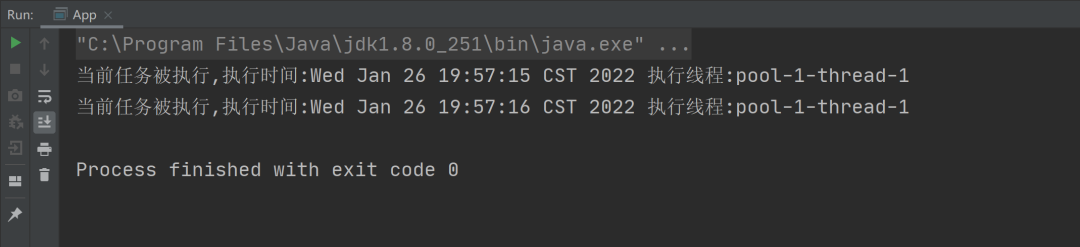 从上述执行结果可以看出,给线程池添加了 4 个任务,而线程池只执行了 2 个任务就结束了,其他两个任务执行了拒绝策略 DiscardPolicy 被忽略了,这就是拒绝策略的作用。
AbortPolicy拒绝策略
为了和 DiscardPolicy 拒绝策略对比,我们来演示一下 JDK 默认的拒绝策略 AbortPolicy 中止策略,线程池会抛出异常并中止执行此任务,示例代码如下:
-
public static void main(String[] args) { -
// 任务的具体方法 -
Runnable runnable = new Runnable() { -
@Override -
public void run() { -
System.out.println("当前任务被执行,执行时间:" + new Date() + -
" 执行线程:" + Thread.currentThread().getName()); -
try { -
// 等待 1s -
TimeUnit.SECONDS.sleep(1); -
} catch (InterruptedException e) { -
e.printStackTrace(); -
} -
} -
}; -
// 创建线程,线程的任务队列的长度为 1 -
ThreadPoolExecutor threadPool = new ThreadPoolExecutor(1, 1, -
100, TimeUnit.SECONDS, new LinkedBlockingQueue<>(1), -
new ThreadPoolExecutor.AbortPolicy()); // 显式指定拒绝策略,也可以忽略此设置,它为默认拒绝策略 -
// 添加并执行 4 个任务 -
threadPool.execute(runnable); -
threadPool.execute(runnable); -
threadPool.execute(runnable); -
threadPool.execute(runnable); -
// 线程池执行完任务,关闭线程池 -
threadPool.shutdown(); -
}
以上程序的执行结果如下: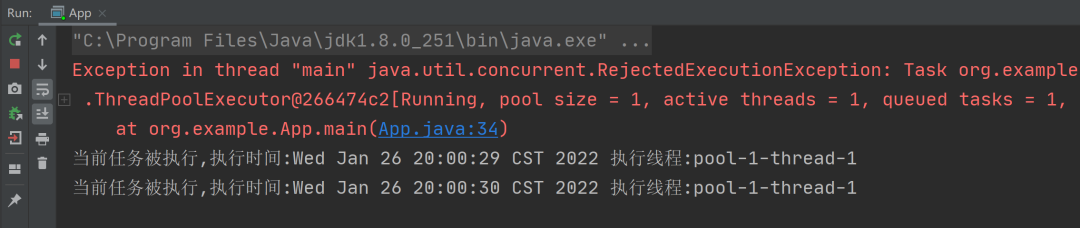 从结果可以看出,给线程池添加了 4 个任务,线程池正常执行了 2 个任务,其他两个任务执行了中止策略,并抛出了拒绝执行的异常 RejectedExecutionException。
自定义拒绝策略
当然除了 JDK 提供的四种拒绝策略之外,我们还可以实现通过 new RejectedExecutionHandler,并重写 rejectedExecution 方法来实现自定义拒绝策略,实现代码如下:
-
public static void main(String[] args) { -
// 任务的具体方法 -
Runnable runnable = new Runnable() { -
@Override -
public void run() { -
System.out.println("当前任务被执行,执行时间:" + new Date() + -
" 执行线程:" + Thread.currentThread().getName()); -
try { -
// 等待 1s -
TimeUnit.SECONDS.sleep(1); -
} catch (InterruptedException e) { -
e.printStackTrace(); -
} -
} -
}; -
// 创建线程,线程的任务队列的长度为 1 -
ThreadPoolExecutor threadPool = new ThreadPoolExecutor(1, 1, -
100, TimeUnit.SECONDS, new LinkedBlockingQueue<>(1), -
new RejectedExecutionHandler() { -
@Override -
public void rejectedExecution(Runnable r, ThreadPoolExecutor executor) { -
// 执行自定义拒绝策略的相关操作 -
System.out.println("我是自定义拒绝策略~"); -
} -
}); -
// 添加并执行 4 个任务 -
threadPool.execute(runnable); -
threadPool.execute(runnable); -
threadPool.execute(runnable); -
threadPool.execute(runnable); -
}
以上程序的执行结果如下: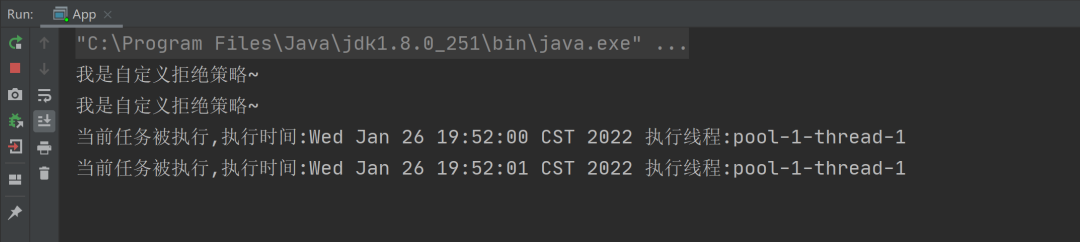
总结
线程池的执行流程有 3 个重要的判断点(判断顺序依次往后):判断当前线程数和核心线程数、判断当前任务队列是否已满、判断当前线程数是否已达到最大线程数。如果经过以上 3 个判断,得到的结果都会 true,则会执行线程池的拒绝策略。JDK 提供了 4 种拒绝策略,我们还可以通过 new RejectedExecutionHandler 并重写 rejectedExecution 方法来实现自定义拒绝策略。